Agents, Autonomy, and the Harness
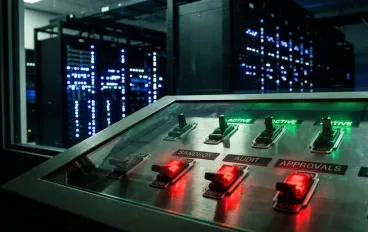
Agents stopped being chatbots that answer questions and started being systems that run errands. The 2026 breakthrough is not full autonomy — it is bounded autonomy under a harness you can inspect.
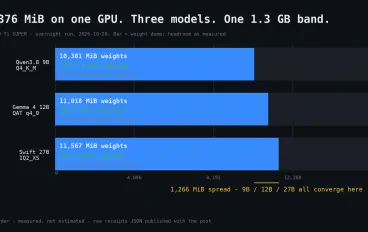
Three models, three parameter counts, one 16 GB GPU: every weight dump landed inside a 1.3 GB band. What "fits your hardware" really means — measured receipts.
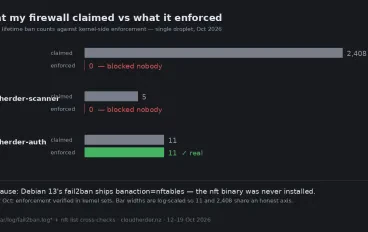
One number said our SSH port was under relentless attack. The other said our firewall had been repelling it for months. On Monday, 12 October we discovered the attack couldn't have succeeded, and the defence had never fired. Both dashboards were honest. Neither was true.
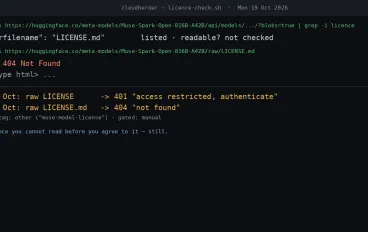
The license for the most-hyped "open-weight" model of the year can be listed but not read. Saturday it answered 401; today, 404. We have the receipts. Here's what "open" means now.
I ran Google's new definition of page effort against our own site — 22 posts, 21 passes, and the one that failed was the most popular.
A practical comparison of Ollama, LM Studio, and LocalAI: which local AI runtime fits which job, what they share under the hood, and how to choose without picking a fight.
CloudHerder's position on the AI stack: not anti-frontier, but pro-independence. The case for inspectable, bounded systems you control.
A new model category is emerging.
Most tools that promise "run AI locally" ship as a Python script, a CLI that assumes you enjoy dependency management, or a desktop app that phones home.
OpenClaw 2.0 Has Enterprise Security. It's All Turned Off.